
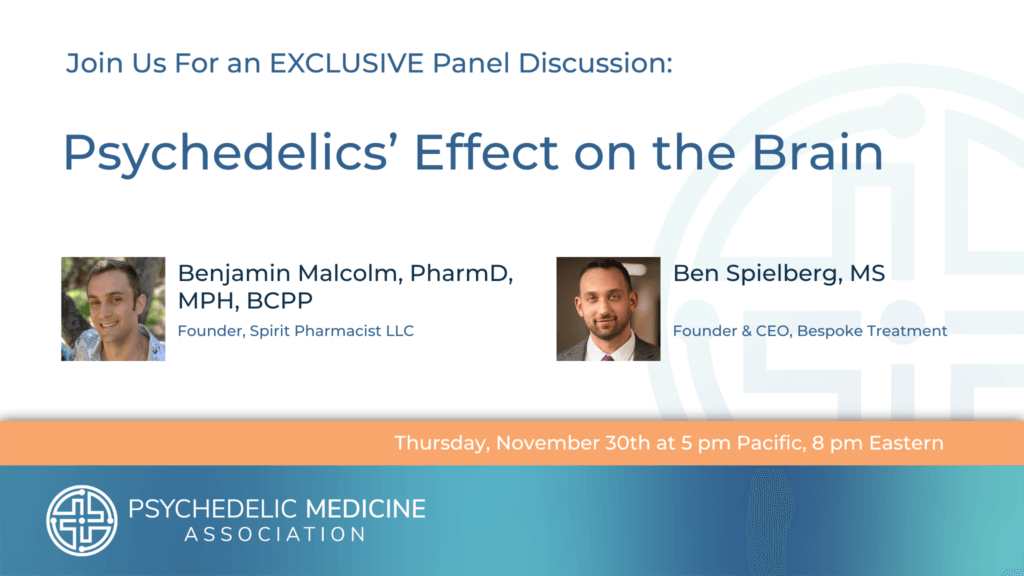

We very often look at how psychedelics affect different disease states, like depression or PTSD, but what lies at the heart of how psychedelic medicines enact their effect on these conditions is how they affect the brain.
While the scientific community is still trying to figure out the exact mechanisms through which psychedelic medicines are seemingly so much more effective for difficult-to-treat conditions than most currently available therapies, with modern neuroimaging modalities, we can now get a better idea of how the brain responds to these medicines, which starts to give us a better understanding of why they are so efficacious.
In addition, we know a lot of the neuropsychopharmacology involved in how psychedelics interact with certain receptors and what those interactions lead to…and how that may interact with other psychoactive medications.
This month we are truly fortunate to have panelists who have spent an immense amount of time studying the aforementioned brain-related topics. They’ll be discussing the following:
- The pharmacology behind how psychedelics interact with receptors in the brain
- What neuroimaging tells us about psychedelics’ effect on the brain
- How psychedelics may interact with other psychoactive medications